
For years, digital advertising has been driven by the promise of precision, personalisation and measurable results.
But as the digital landscape becomes more complex, brands are facing new challenges around audience verification, data quality and understanding true consumer behaviour.
At the same time, something interesting is happening inside physical retail environments.
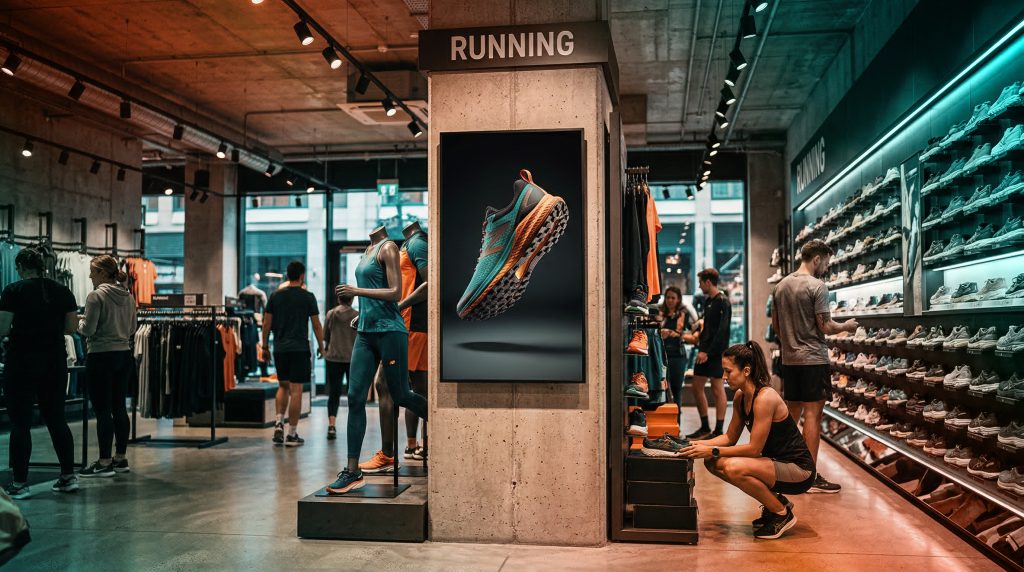
Stores are no longer just places where transactions happen. They are becoming connected, data-rich environments where brands can understand how customers move, engage and respond in real time.
This is where the next evolution of retail media begins.
The store has become a media channel
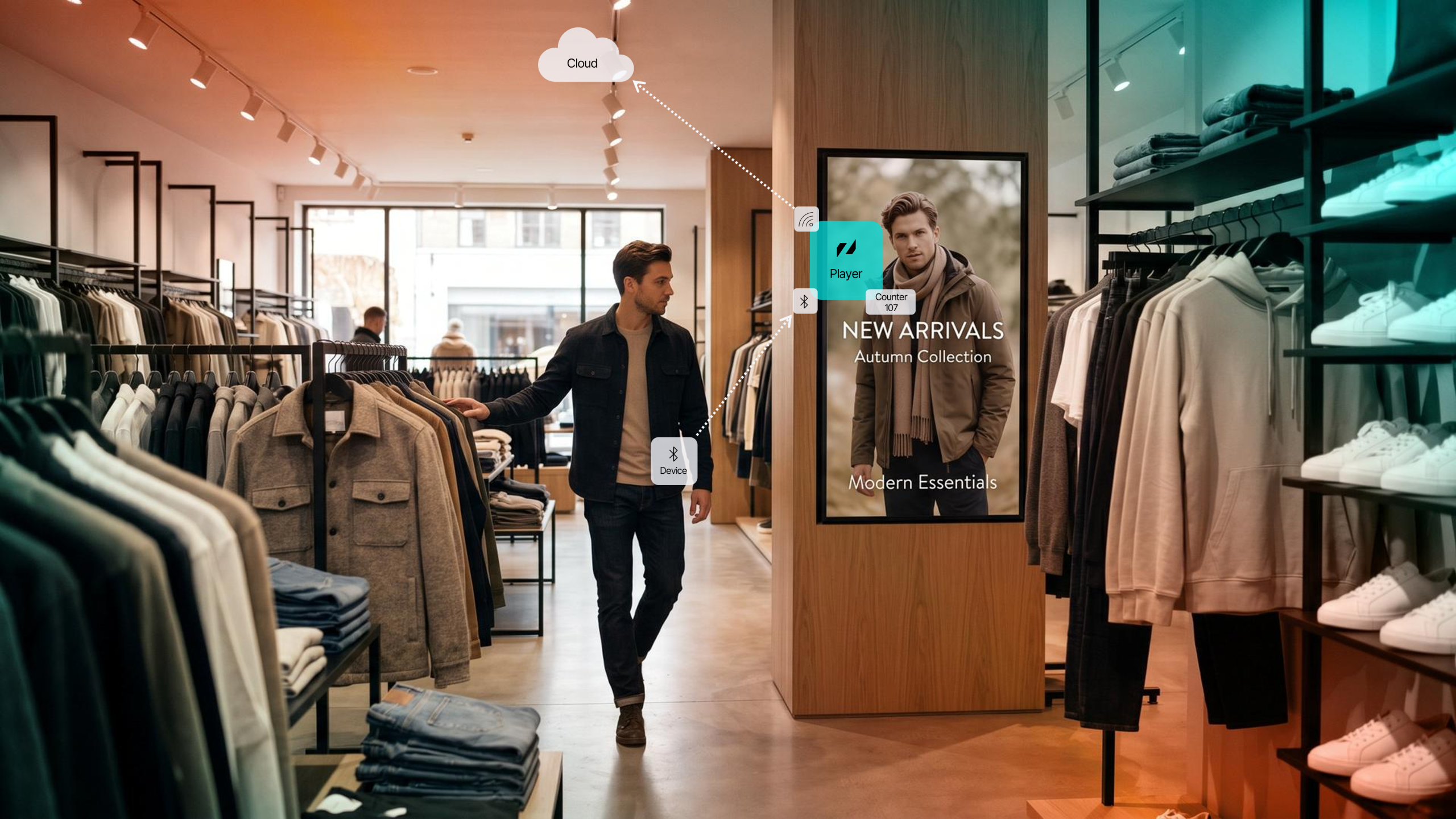
Retailers are increasingly recognizing the value of their physical environments, customer journeys, and first-party data ecosystems. Stores are becoming media channels in their own right, capable of combining advertising, audience analytics, contextual engagement, and sales attribution within a single environment.
Unlike online advertising ecosystems affected by bots and unreliable traffic, physical retail spaces offer direct visibility into how real consumers move, browse, engage, and purchase within the store.
Real-world data is becoming more important
Modern retail spaces generate valuable behavioural insight.
Footfall data, dwell time, audience movement, sensor technology, POS data and environmental factors all provide a clearer picture of how customers experience a store.
Historically, turning this information into meaningful action has been complex.
Today, advances in analytics and AI are helping retailers connect these signals, identify patterns and make more informed decisions about content, campaigns and customer journeys.
The result is a move away from assumptions and towards data-driven optimisation.
Retailers can understand what works, adapt faster and create experiences that are more relevant to the people in front of them.
Context will define the future of retail media
Consumers do not make purchasing decisions in isolation.
Behavior inside physical retail environments is influenced by a wide range of contextual factors including time of day, store traffic, weather conditions, location, product placement, and surrounding activity.
This creates enormous opportunities for more intelligent retail media strategies.
Retailers are beginning to explore how AI and audience analytics can help identify contextual buying triggers and dynamically adapt content delivery in real time. Campaigns can become more responsive to environmental conditions, customer behavior, and purchasing intent as it happens inside the store.
The value of retail media therefore extends far beyond simply displaying advertisements on screens. Increasingly, it is about understanding context and using real-world signals to deliver more relevant and measurable engagement.
The traditional CMS model is evolving
As retail media environments become more sophisticated, the role of the content management system is also changing.
Traditional playlist-based CMS platforms were designed primarily for scheduling content across screens. Modern retail media environments require something far more intelligent.
Retail media CMS platforms now need to:
- Support contextual targeting
- Integrate with adtech ecosystems
- Adapt content dynamically
- Respond to environmental conditions
- Optimize campaign delivery in real time
- Support future programmatic workflows
The question is no longer simply how to display content. Retailers now need to understand how to monetize environments intelligently while balancing customer experience, campaign performance, and operational efficiency.
This is creating demand for connected ecosystems where content management, audience analytics, campaign orchestration, and operational infrastructure work together seamlessly.
AI’s impact on retail media
The opportunity of AI in retail media goes beyond content creation. AI can help retailers
-connect multiple data sources
– identify patterns in customer behaviour
– optimise campaigns and experiences based on what is happening inside the store
But the value of AI will depend on the objectives, data and guardrails behind it.
As more decisions become automated, retailers and advertisers need to be clear about what they are asking AI to optimise for. For example, if the objective is ROAS (return on advertising spend), an algorithm may prioritise customers who were already highly likely to buy. The campaign may perform strongly against its target metric without necessarily generating incremental sales or creating new demand.
This makes transparency and measurement increasingly important. Retailers need to understandnot only whether AI is achieving its objectives, but whether those objectives are delivering meaningful value for the business and its customers.
Retailers are becoming intelligence partners
As retail media matures, retailers themselves are taking on increasingly strategic roles within the advertising ecosystem.
The opportunity is no longer limited to selling advertising inventory. Retailers are now in a position to provide brands with audience intelligence, behavioral insights, campaign performance data, and sales attribution that support broader business strategy and product planning.
This fundamentally changes the relationship between retailers and advertisers.
Retailers become more than media owners. Increasingly, they become trusted commercial partners capable of helping brands understand how consumers behave within physical environments and what influences purchasing decisions in the real world.
The future of retail media is physical
Retail media is entering an exciting new phase. The brands and retailers that succeed will be those that combine digital signage, audience intelligence, AI and real-world data into connected ecosystems that continuously improve. The future of retail media will not just be about reaching audiences. It will be about understanding them. And increasingly, the most valuable media channel may not be online. It may be the physical spaces customers visit every day.

Jorn Olsen
Director of Analytics and Retail Media
Let’s talk
Explore how a connected, outcome-driven Retail Media setup can drive real commercial impact.