
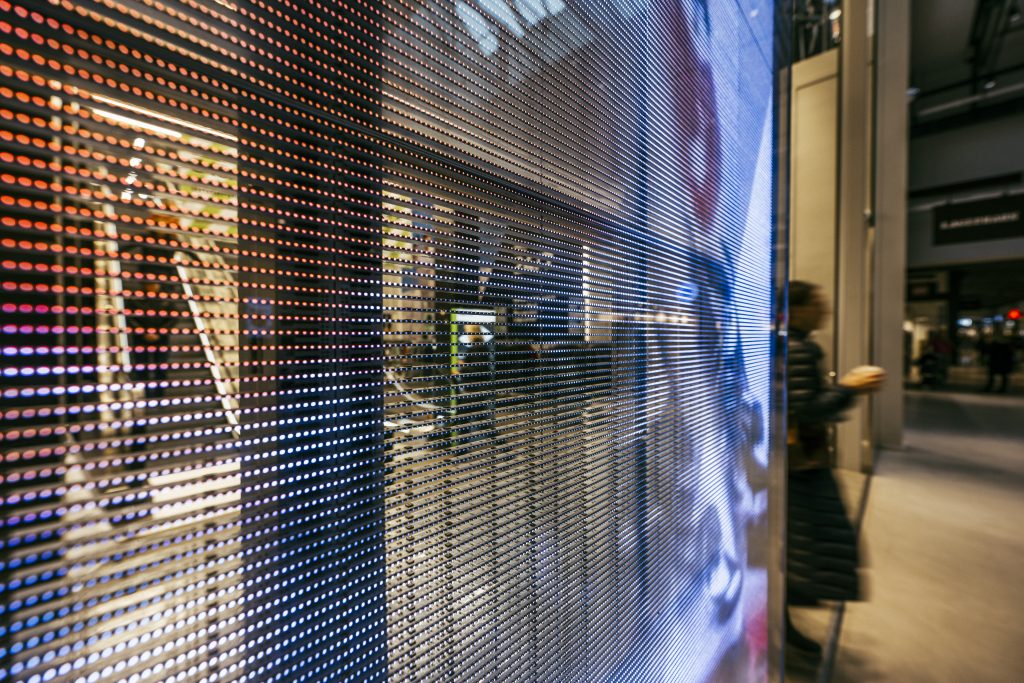
LED display technology is now a core building block of modern digital signage and DOOH networks. It has become a design material used to shape environments, create immersive brand moments and deliver real-time communication at scale. From transport hubs and roadside billboards to retail media networks and digital menu boards, LED is replacing traditional LCD in many high-impact applications.
As the technology evolves, it continues to unlock new opportunities for more engaging, high-performance visual experiences.
In this article, we take a closer look at two of the most widely deployed LED technologies, Surface-Mount Device (SMD) and Chip-on-Board (COB). While the technology behind them is advanced, we break it down in a clear way to help you understand where each fits best and how to choose the right approach for your environment.

Surface-Mount Device (SMD)
(Illustration demonstrating the pixel pattern)

Chip-on-Board (COB)
(Illustration demonstrating the uniform image)
What is SMD LED technology?
SMD (Surface-Mount Device) is the established standard for LED displays and continues to power the majority of digital signage networks globally. It works by mounting individual LED packages, containing red, green, and blue diodes, onto a circuit board. This modular approach makes SMD highly versatile and scalable across different screen sizes and formats.
What are the benefits of SMD LED displays?
- Proven scalability across large networks and formats
- High brightness, ideal for outdoor and high-ambient-light environments
- Cost-effective for large-scale deployments
- Flexible maintenance, with component-level repair options
- Wide availability across pixel pitches and configurations
SMD remains the go-to choice when reach, visibility, and scale are the priority, particularly in DOOH environments where content needs to cut through busy, high-traffic spaces.
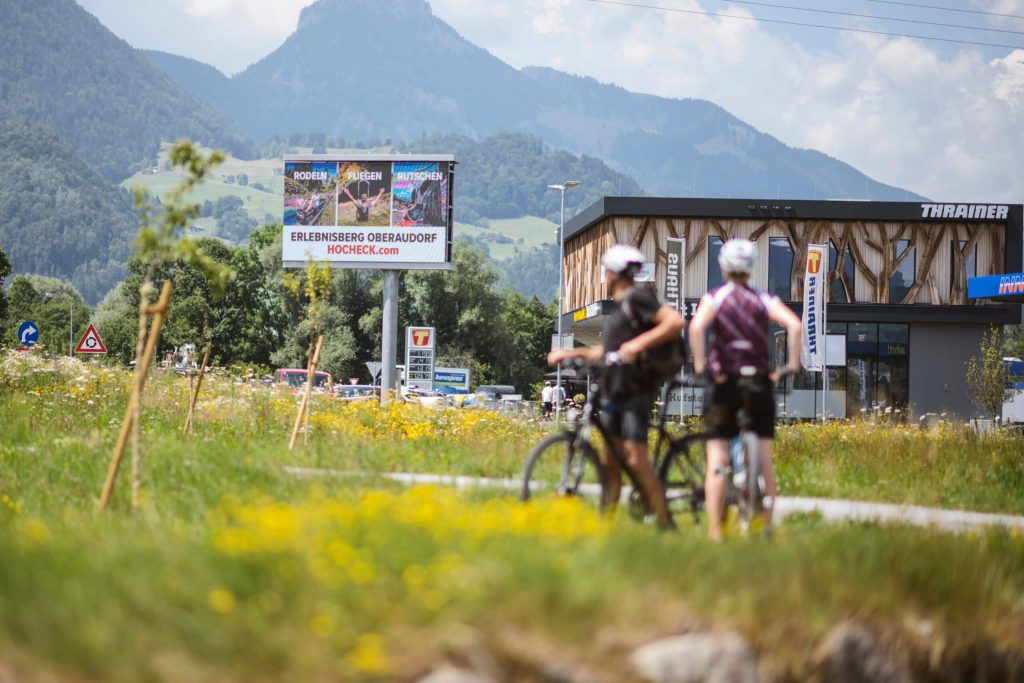
Where is SMD LED used in digital signage?
- Large-format DOOH billboards
- Transport hubs and passenger information displays
- Retail window displays and media networks
- QSR digital menu boards
- Stadiums and large venues
What is COB LED technology?
COB (Chip-on-Board) takes a different approach by mounting multiple LED chips directly onto the circuit board and encapsulating them within a protective layer. The result is a smooth, continuous light-emitting surface rather than visible individual pixels. For digital signage, this changes how audiences experience the screen, especially at close viewing distances.
What are the benefits of COB LED displays?
- Seamless visual surface, minimizing visible pixelation
- Improved contrast and color uniformity
- Enhanced durability, with protective encapsulation
- Reduced glare, supporting comfortable close-up viewing
- Lower maintenance requirements over time
This makes COB well-suited to environments where people are close to the screen and expectations around visual quality are higher.
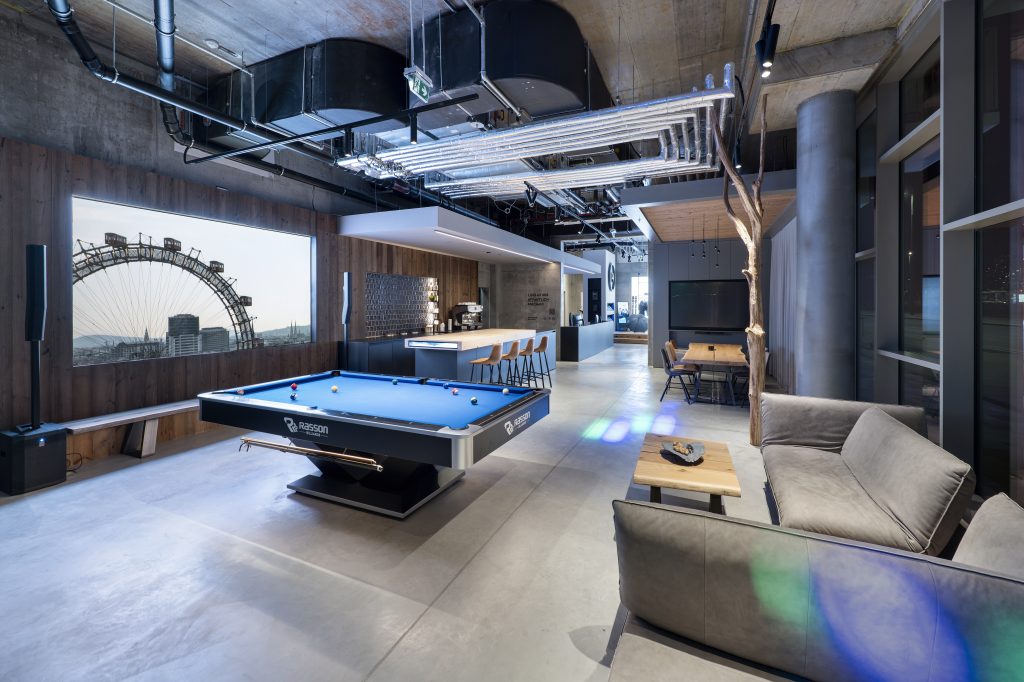
Where is COB LED used in digital signage?
- Premium retail environments
- Interactive kiosks and touchpoints
- Corporate workplaces and experience centers
- Control rooms and mission-critical environments
- Immersive and experiential installations
COB is particularly effective where the screen is part of the physical experience, not just a communication channel.
COB vs SMD LED: key performance differences
Visual quality and viewing distance
SMD displays consist of visible LED packages, which can become noticeable at close range. This is rarely an issue for large-format DOOH, where viewing distances are longer. COB, on the other hand, creates a more uniform surface, delivering smoother image reproduction, higher perceived resolution at close distances and better contrast and color consistency. For retail, workplace and experiential environments, this can directly influence engagement and brand perception.
Durability in real-world environments
For busy, public spaces, COB’s encapsulated design provides protection against dust and moisture, resistance to impact and physical contact and greater reliability in high-traffic areas. This is particularly relevant in transport environments, where durability is critical to maintaining continuous passenger communication. SMD is also robust but may require additional protective treatments, such as a coating, depending on the deployment.
Heat management and operational efficiency
COB technology typically offers improved thermal performance due to how the chips are mounted and distributed. This can contribute to more stable long-term operation, reduced risk of pixel failure and improved energy efficiency over time. For network operators, this supports lower operational risk and more predictable performance across large estates.
Maintenance and serviceability
SMD’s modular structure allows for component-level repairs, making it practical for large, distributed networks where ongoing maintenance is part of operations. COB, while generally more durable, is less granular in repair. However, its reduced failure rate often offsets this in environments where access is limited or disruption must be minimized.
Cost considerations
Traditionally, SMD has been the more cost-effective option, particularly for large-scale and outdoor deployments. However, advances in manufacturing and increased production volumes are rapidly changing the equation. COB technology is becoming increasingly cost-competitive, particularly at finer pixel pitches, driven by simplified manufacturing processes, improved yields and integrated protective layers that reduce the need for additional treatments. As a result, COB is not only reshaping performance expectations but also challenging traditional cost assumptions across the LED market.
What this means for digital signage and DOOH networks
At ZetaDisplay, we do not see SMD and COB as competing technologies. They play different roles within a connected digital signage ecosystem. SMD enables scale, reach, and visibility across large DOOH and retail media networks. COB enhances quality, close-range engagement and premium experiences.
The most effective deployments often combine both, aligning display technology with the role each screen plays in the customer journey. No matter the application, whether you are building a large-scale DOOH network, enhancing a transport environment or creating an immersive in-store experience, choosing the right LED technology is key to delivering impact.
Our experts work closely with you to design the right solution for your environment, your audience and your commercial goals, making complex technology simple and ensuring every screen delivers measurable value.

Robert Edlund
Technical Project Management, LED Expert
Let’s talk
We help you to find the right technology for your project.