
Retail media was everywhere at DMEXCO this year. That in itself is hardly surprising. What was more useful was hearing where retailers, technology providers and advertisers are focusing their attention now that the market is maturing.
A lot of the conversations came back to the same practical issues:
- how to connect retail media activity across different environments,
- how to measure it properly and
- how to turn early activity into something that can work at scale.
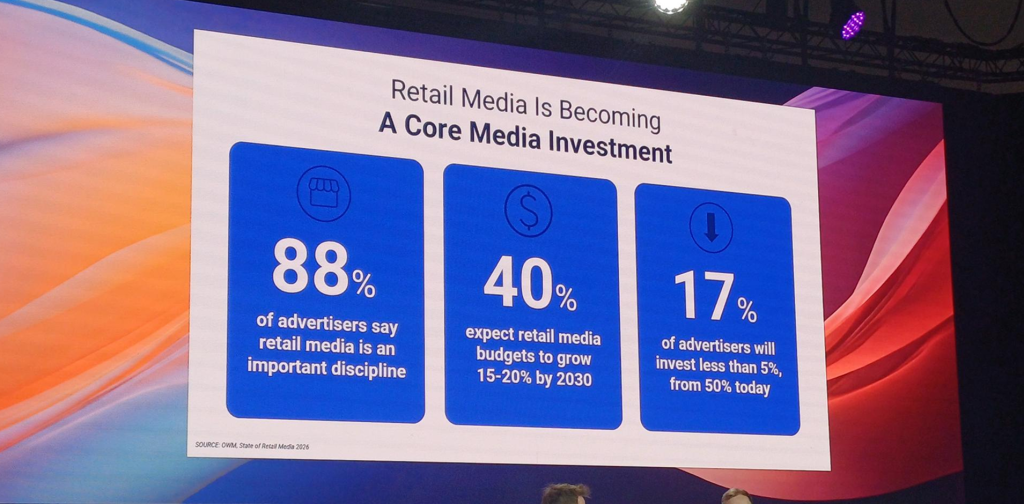
In-store was a particularly interesting part of that discussion. Physical retail is becoming more closely connected to the wider advertising ecosystem, bringing digital signage, data, programmatic technology and measurement into conversations that have historically centred on online media.
Retail media is becoming genuinely omnichannel
There was a clear appetite for retail media that works across more than a retailer’s website or app.
Onsite, offsite and in-store media are increasingly being discussed together. Campaigns can be planned across digital channels and the physical store, rather than as completely separate activities.
This makes sense commercially, but it also creates a management challenge. As retailers add more inventory and more channels, they need a straightforward way to understand what they have available, sell it and manage campaigns across it.
The physical store adds another valuable dimension. Retailers already have audiences there, and many have established digital screen networks too. Connecting those assets to a broader retail media strategy gives the screens a much wider role.
Digital signage and retail media
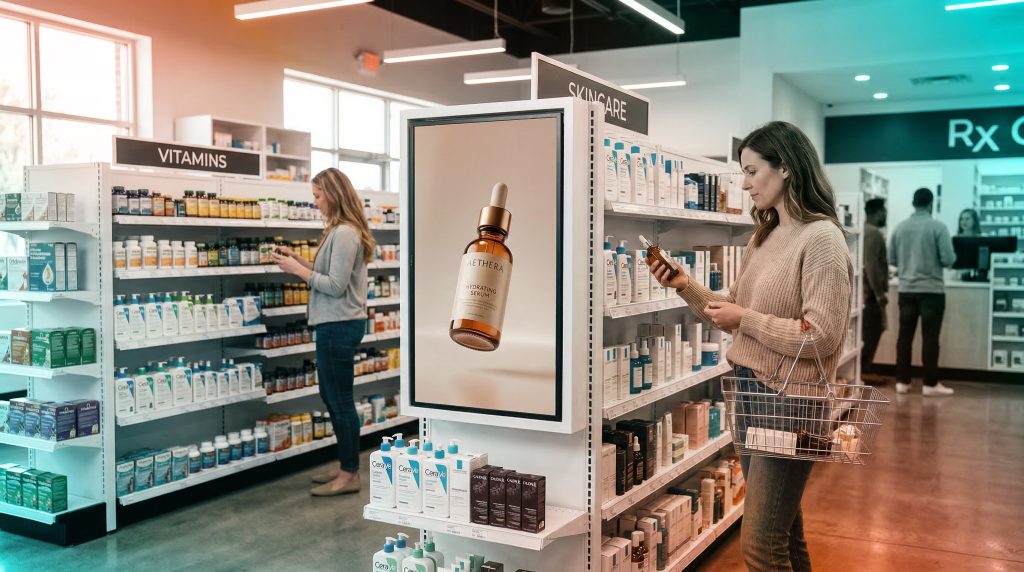
Digital signage plays a critical role in physical retail environments. Screens support promotions, pricing, navigation, product discovery and the overall customer experience.
Retail media adds another use case. An established screen network can provide media inventory that reaches shoppers in a very different context from an online advert. The audience is physically in the retail environment, often close to the products and categories being promoted.
We have already seen how this can work in practice. ZetaDisplay has delivered retail installations where digital signage provides an advertising platform alongside its role in the customer experience, creating an additional commercial opportunity from the screen estate.
That does not mean filling every available screen with advertising. The value of in-store media depends heavily on where content appears, when it appears and whether it feels relevant in that environment.
It also creates opportunities for non-endemic advertisers. With the right creative idea and a good understanding of the audience, a brand does not necessarily need to be sold by the retailer to have a relevant presence in-store.
Endemic, near-endemic, and non-endemic advertising
What’s the difference and why it matters
Measurement is getting much more attention
Measurement came up repeatedly in our conversations at DMEXCO.
Impressions and reach are useful, but advertisers increasingly want to know more about what happened as a result of their investment. That is pushing analytics, first-party data and measurement much higher up the retail media agenda.
In-store presents an interesting opportunity here because the technology around digital signage is becoming more sophisticated.
For example, ZetaDisplay’s Engage Suite can connect signage activity with audience and footfall analytics, helping network owners better understand campaign exposure and activity around their screens.
This kind of insight becomes increasingly important as screens form part of larger retail media campaigns. Retailers need to understand how in-store performs alongside their other channels, while advertisers need useful evidence of what their investment delivered.
There is still work for the industry to do here, particularly around creating measurement approaches that make sense across different channels. But the direction was clear from the conversations at DMEXCO: measurement is becoming central to the retail media proposition.
In-Store Retail Media measurement
Understand the measures and measurement standards by IAB
Relevance matters more as networks grow
Personalisation was another recurring subject, often alongside AI.
The AI conversation at DMEXCO felt quite practical. There was plenty of discussion around how it can improve targeting, content creation and campaign optimisation rather than simply focusing on the technology itself.
For digital signage, this fits with a direction the industry has already been moving in. Dynamic content can use information such as location, time, stock availability and other data sources to determine what appears on screen.
AI gives retailers and advertisers more tools to work with, particularly when managing large networks and multiple content variations. But more personalisation does not automatically make communication more useful. The creative still needs to suit the audience, the location and the moment.
That becomes even more important in-store, where advertising is sharing space with the wider customer experience.
In-store retail media is moving closer to adtech and martech
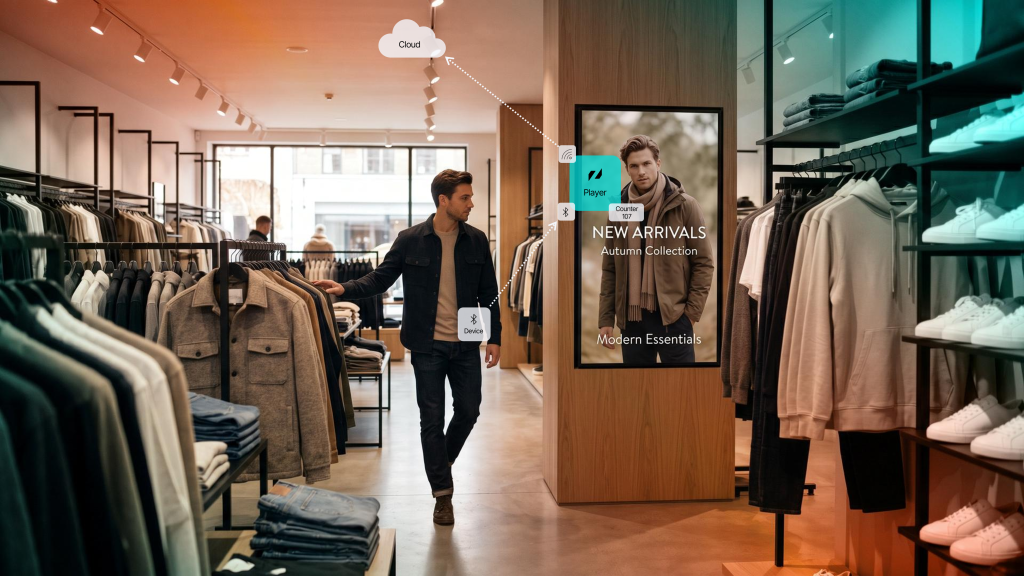
Another observation from DMEXCO was how closely retail media now sits alongside the wider advertising and marketing technology industries.
Programmatic advertising, analytics, first-party data, content management and campaign measurement increasingly overlap. Digital signage is becoming part of that same conversation.
For those of us working in the signage industry, this is an important development. A screen does not have to operate as an isolated endpoint with its own content schedule and its own set of data. It can connect with the retailer’s wider marketing technology, data and content ecosystem. This principle has shaped the development of ZetaDisplay’s Engage Suite, including its API integrations, analytics capabilities and ability to connect digital signage with wider business systems.
As retail media develops, those connections become much more useful.
The challenge now is getting from pilot to scale
Perhaps the most consistent message we heard at DMEXCO was also one of the simplest: there is plenty of interest in retail media.
The harder questions are practical ones:
- What is the business case?
- Which inventory should be made available?
- How will it be sold?
- How do you manage campaigns across onsite, offsite and in-store environments?
- What should be measured?
- Once something works in a handful of locations, how do you roll it out across hundreds or thousands?
These are the questions that will shape the next stage of the market.
For retailers with an established digital signage network, there is a particularly interesting starting point. They already have physical infrastructure and an audience. Add the right content, data, analytics and commercial model, and those screens can play a much bigger role in the retail media mix.
Our conversations at DMEXCO suggest that this is where a lot of attention is now heading. Retail media is becoming more connected, measurement is becoming more important and the physical store is taking a more prominent place in the discussion.
For digital signage, that makes the next few years particularly interesting.

Ola Sæverås
Chief Business Officer
Let’s talk
Explore how a connected, outcome-driven Retail Media setup can drive real commercial impact.