
How to balance trade marketing and brand building
Retail media networks are transforming stores into increasingly sophisticated advertising environments. But the key question is no longer just where displays are placed, it is how those placements are used and what outcomes they are expected to deliver.
The real question: what is the objective?
Not all placements serve the same purpose. Some are designed to drive immediate sales. Others are better suited to building long-term brand strength.
The closer a display sits to the product, the greater its ability to influence behaviour at the moment of decision. This is the foundation of physical availability and one of the reasons trade marketing has always been so effective. But not every campaign is designed to drive immediate conversion.
Many campaigns aim to build mental availability, which strengthens brand recall, salience and future choice. In these cases, context, reach, and attention matter more than proximity to the shelf. Strong brands need both.
Physical availability drives short-term sales. Mental availability builds long-term growth. The most effective retail media strategies combine the two.
Public zones vs category zones
A useful way to think about placement strategy is through two types of space: public zones and category zones.
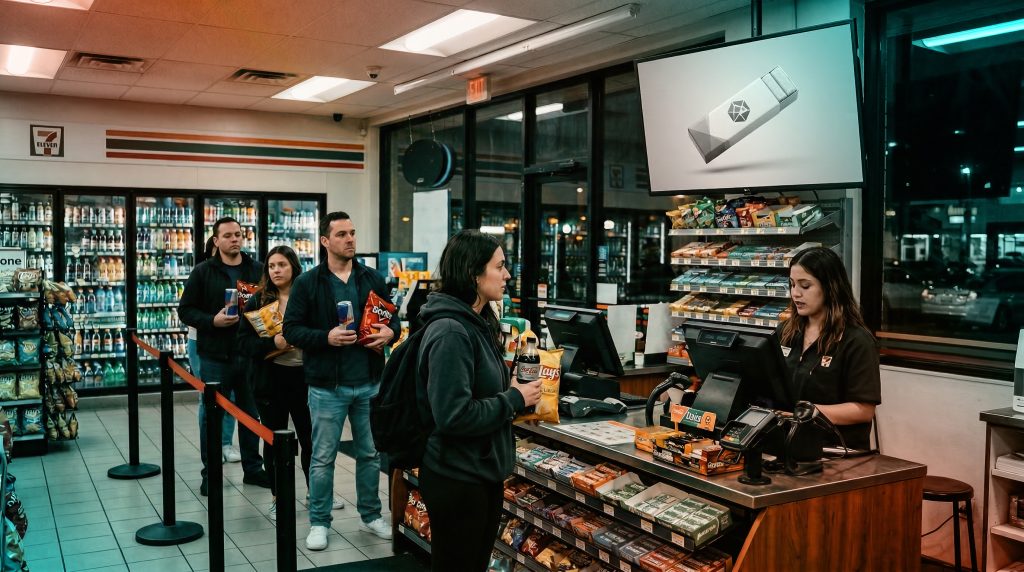
Public zones include entrances, storefronts, racetracks, and checkout areas. These areas are less tied to specific products and can support a broader range of advertisers. They are well suited to brand campaigns, launches, and high-reach messaging.
Category zones include aisles, shelf-edge displays, endcaps, and product-specific areas. These placements sit closer to the point of decision and typically offer stronger short-term sales potential. However, they are also more restrictive.
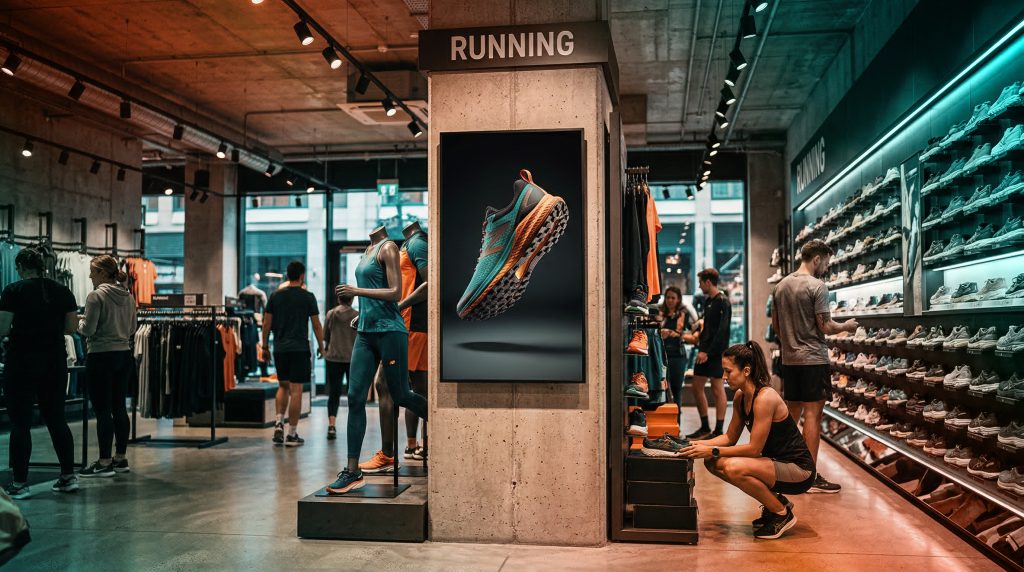
The closer media gets to the product, the more important contextual relevance becomes.
Moving beyond product adjacency
Category placements are often associated with endemic advertising brands that are sold within that category. But this is only part of the opportunity.
A category can also signal audience intent. A shopper browsing protein bars may also be relevant for fitness services, supplements, or athletic apparel. In this way, category zones can act as both product environments and audience signals. This opens up opportunities for near-endemic and even selected non-endemic campaigns, as long as the contextual link remains strong.
Endemic, near-endemic, and non-endemic advertising
What’s the difference and why it matters
What content works best where?
In public zones, content should focus on awareness, salience and broad relevance. These placements support brand storytelling, seasonal campaigns and new product launches. Creative can be more emotional and less tied to a specific product.
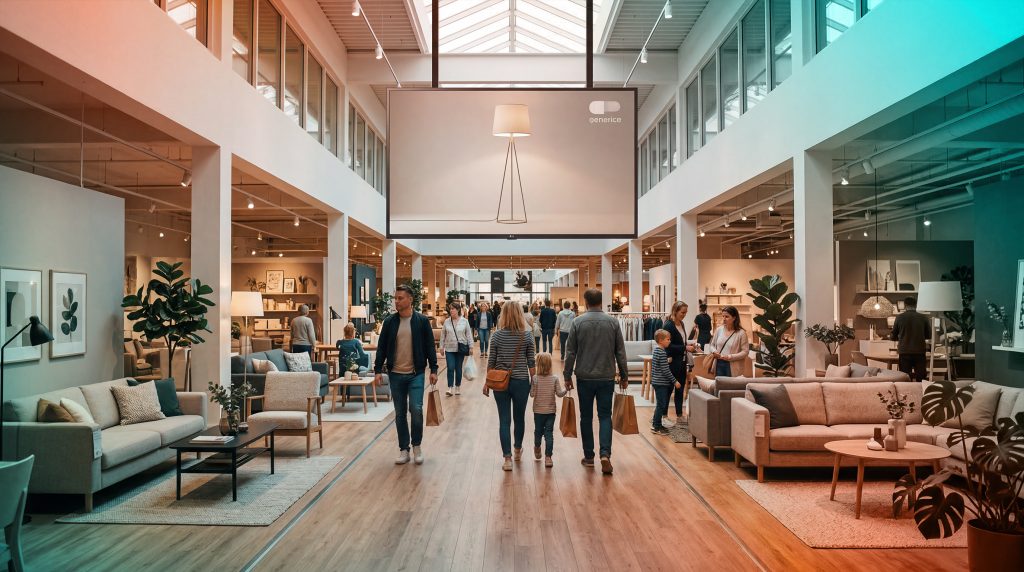
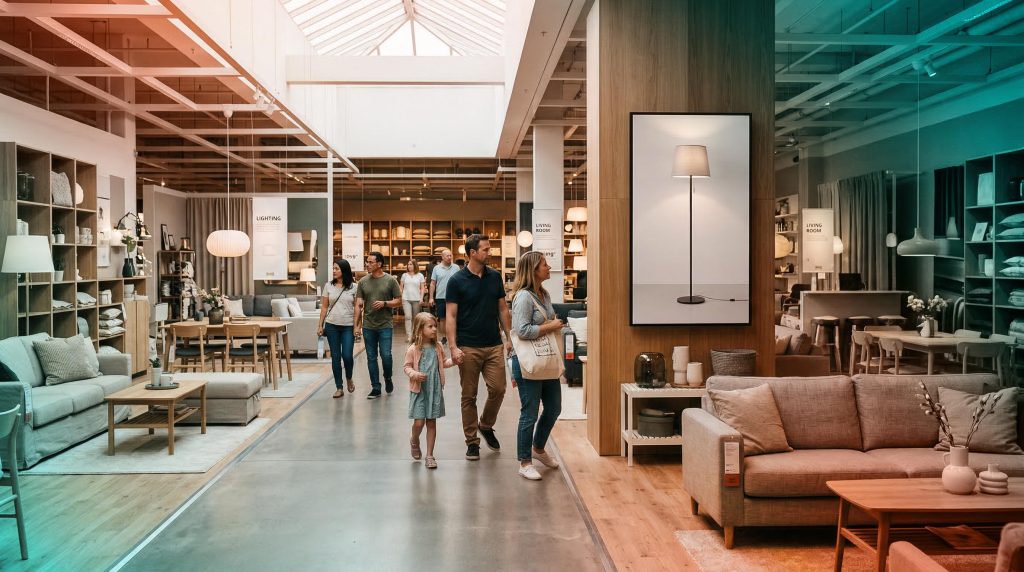
The racetrack is particularly versatile. It sits close enough to the shopping journey to feel relevant, but remains flexible enough to support both brand and commercial messaging.

In category zones, content needs to work harder at the point of decision. Messaging should be simpler, more practical, and closely tied to the shopper’s task. Product benefits, comparisons, pricing, and clear calls to action perform well. Brand campaigns can still work in these environments, but they require stronger contextual alignment to feel natural and effective.
Balancing trade marketing and retail media
The future of in-store media is not about choosing between trade marketing and retail media. It is about balancing them. Some retailers blend the two commercially. Others keep them separate. Both approaches can work – but alignment between placement and objective is key.
When the goal is immediate return on ad spend, placements move closer to the shelf and the decision point. When the goal is brand building, placements can move further into public zones where reach and attention are higher.
A more realistic way to think about in-store media
Retail media should not be treated as a binary choice between trade and media. It is a spectrum shaped by context, relevance, and campaign objective. Public zones support mental availability and scale. Category zones support physical availability and conversion. Both are essential.
Trade marketing is evolving into a more measurable and more integrated part of modern retail media ecosystems. At the same time, retail media is expanding deeper into the store and into the same spaces trade marketing has always occupied.
The retailers that succeed will be those that recognise this overlap and design their networks accordingly, balancing short-term sales activation with long-term brand growth across the entire shopper journey.

Jorn Olsen
Director of Analytics and Retail Media
Let’s talk
Explore how a connected, outcome-driven Retail Media setup can drive real commercial impact.