
As retail media networks expand across physical environments, measurement has become a central topic for retailers, brands and advertisers. In digital channels, performance metrics have been well established for years. In physical spaces such as stores, transport hubs and other public environments, measurement has historically been more difficult.
Today, advances in sensor technology, audience analytics and data integration are changing that. Retailers can now quantify how many people are exposed to in-store media, how long they engage with content and how effectively campaigns reach their target audience.
To understand the value of in-store media, several key measurement metrics are commonly used: impressions, reach, dwell time, opportunities to see, and share of voice. Each provides a different perspective on campaign performance and audience engagement.
In this article we use the Instore Retail Media definitions and measurement standards by IAB.
Gross Impressions
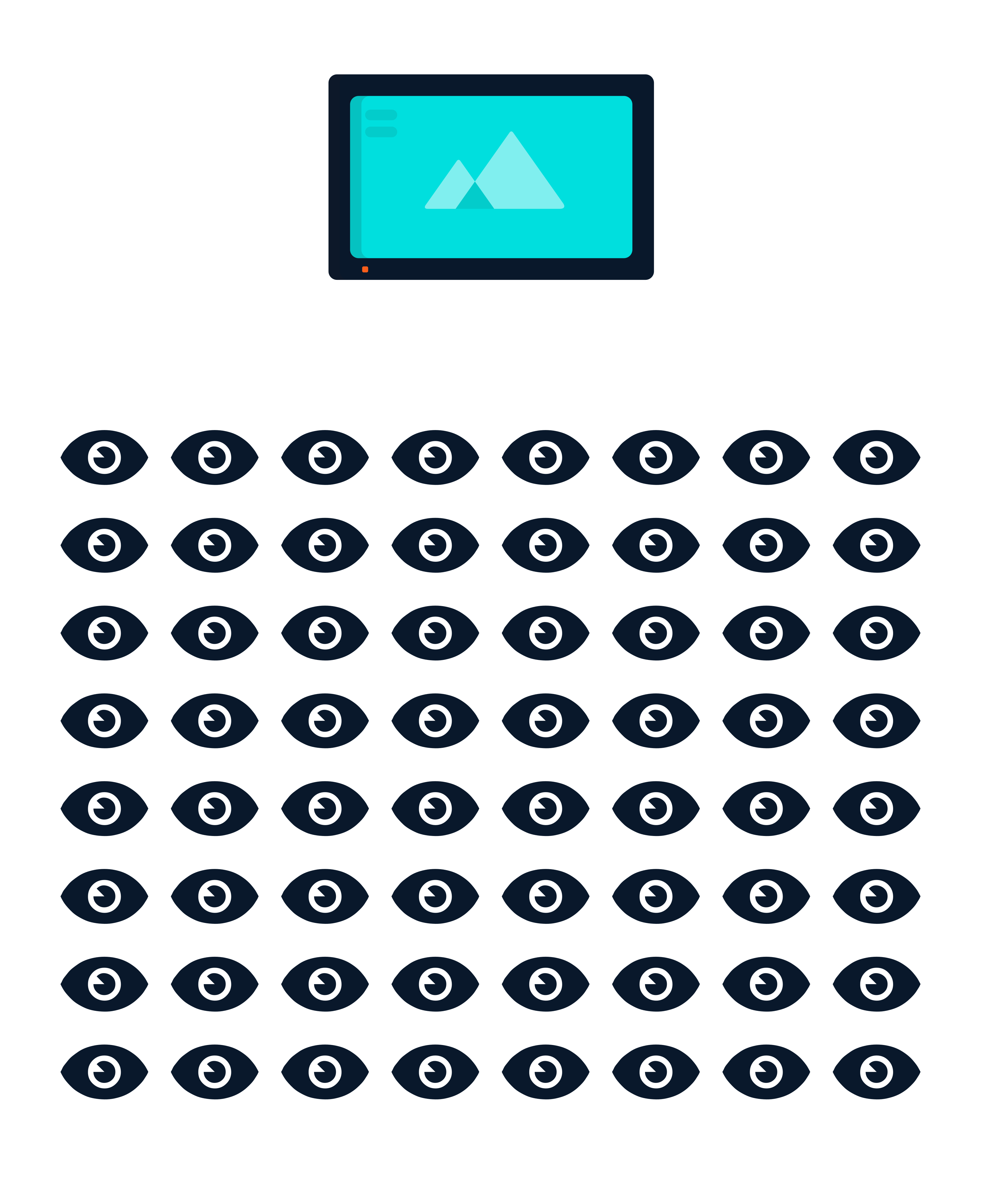
Impressions represent the total number of times a piece of content is viewed or potentially viewed by shoppers within a physical environment.
Impressions
represent the total number of individuals present in the defined display exposure zone while the display is functional.
In many DOOH and in-store media environments, impressions are typically estimated using a combination of footfall data, venue traffic and zoned-based models. In our case, Gross Impressions are quantified using sensor-based presence measurement, giving a more direct count of people present around the screen rather than relying solely on modelled traffic estimates. If a digital display is in a high-traffic aisle where 10,000 shoppers pass each day, for example the content shown on that screen may generate thousands of impressions during a campaign.

Unlike online advertising, where impressions are measured per individual device in physical environments, our award-winning retail media analytics solution measures how many are exposed to a campaign.
These metrics help us understand the scale of exposure a campaign receives within a store or retail network.
Opportunities to see (OTS)
Opportunities To See (OTS)
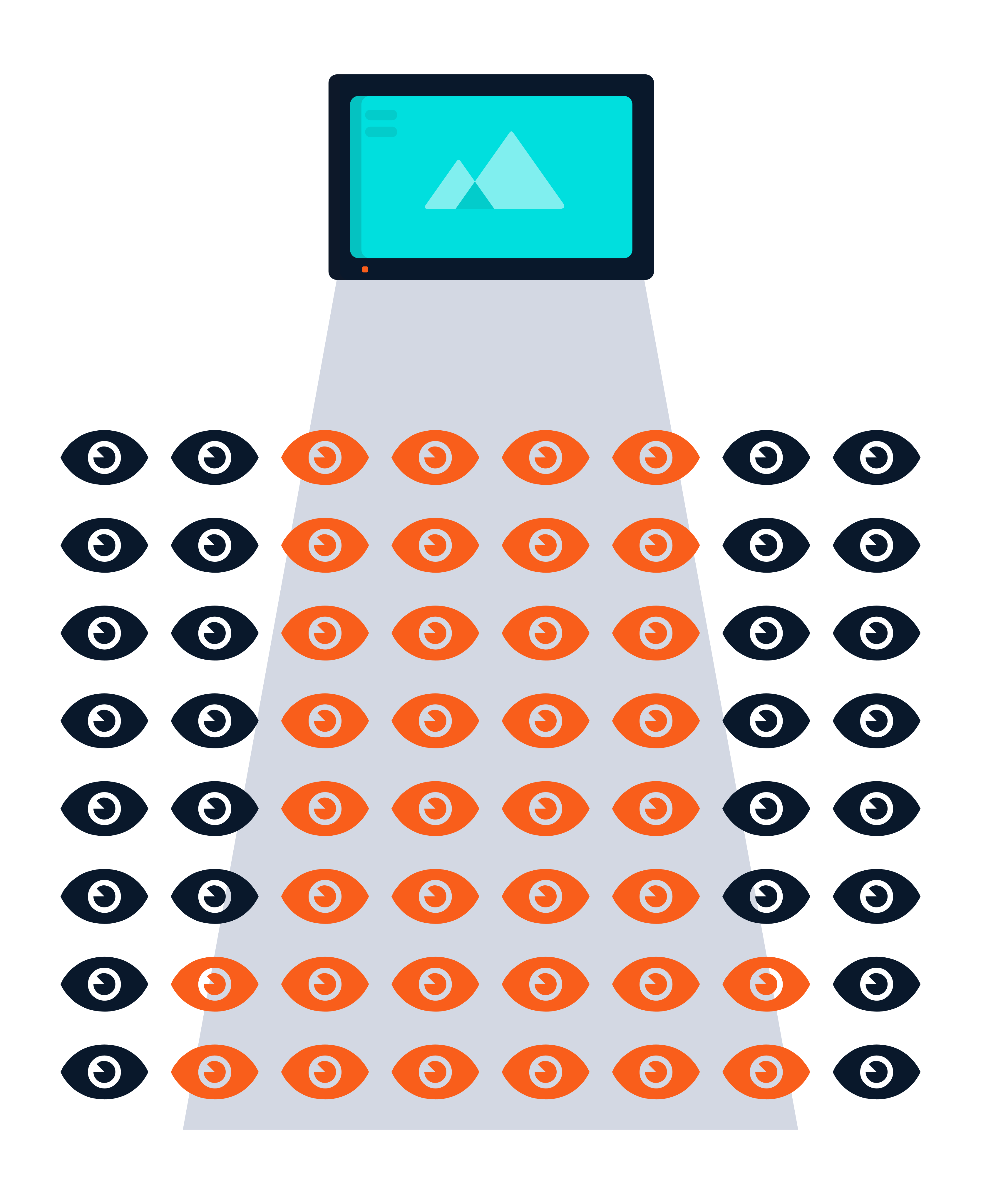
refers to the number of individuals who can view a piece of content while a viewability condition existed during playback.
To distil this, OTS is a refinement of gross impressions: it doesn’t confirm that the ad was seen but indicates that the conditions for seeing it were set in place.
For example, while many DOOH methodologies estimate OTS from traffic and location assumptions, our analytics solution shows sensor-based presence data and links it to playback logs which quantifies OTS based on measured screen-level activity.
In addition, we can use directional BLE (Bluetooth Low Energy) antennas to measure devices that have a viewable condition present.
Reach
Reach
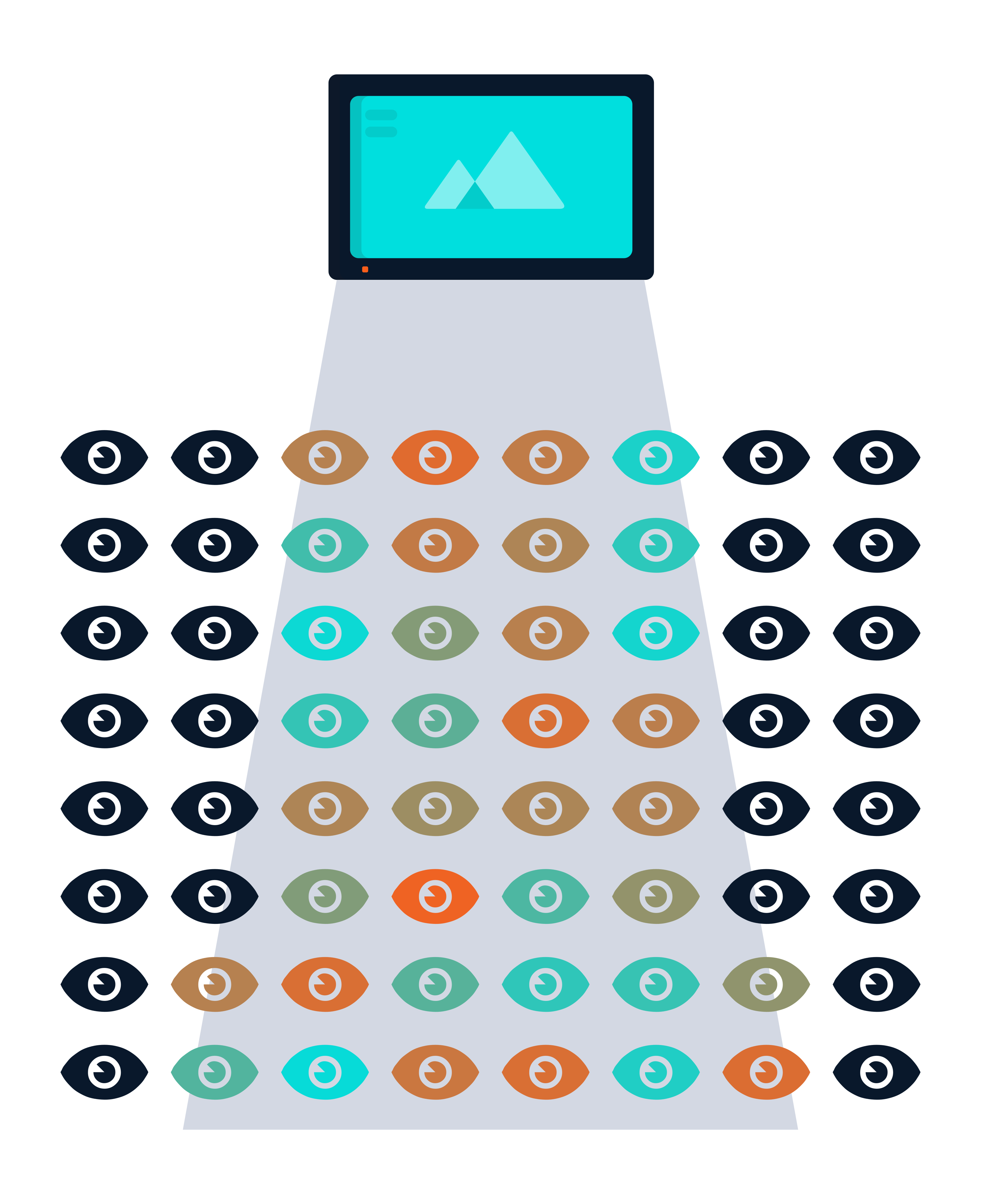
refers to the number of unique individuals exposed to a campaign.
While impressions count total exposures, reach focuses on the size of the audience. For example, a campaign may generate 100,000 impressions, but those impressions may come from 40,000 unique shoppers visiting the store over a specific period.
In retail environments, reach can be estimated using footfall analytics, loyalty data, or anonymous audience measurement technologies such as Wi-Fi and Bluetooth signals.
Reach is particularly valuable for brand campaigns, where the objective is to expose a message to as many relevant shoppers as possible.
BLE-Sniffing
What it is and how ZetaDisplay uses it to measure reach
Dwell time

Dwell time
measures how long shoppers spend within a specific area where media is present.
This metric provides insight into the level of potential engagement with a screen or media placement. For example, shoppers waiting in a checkout queue may spend several minutes in front of a display, creating a longer opportunity for message absorption.
High dwell-time areas often include:
- Checkout and queue areas
- Service counters
- Waiting zones
- Promotional displays
Because audiences remain in these areas longer, they provide ideal locations for more detailed messaging or storytelling content.
Share of Time (SOT) vs Share of Voice (SOV)

Share of Time (SOT)
measures how much of the available advertising space or time is dedicated to a specific brand or campaign.
In digital signage networks, multiple advertisers may share the same screen through rotating content playlists. The SOT determines how often a brand’s message appears relative to other campaigns.
For example, if a campaign appears in 25% of the scheduled screen time on a display network, it has a 25% SOT.
Share of Voice (SOV)
on the other hand, measures the total number of brand impressions.
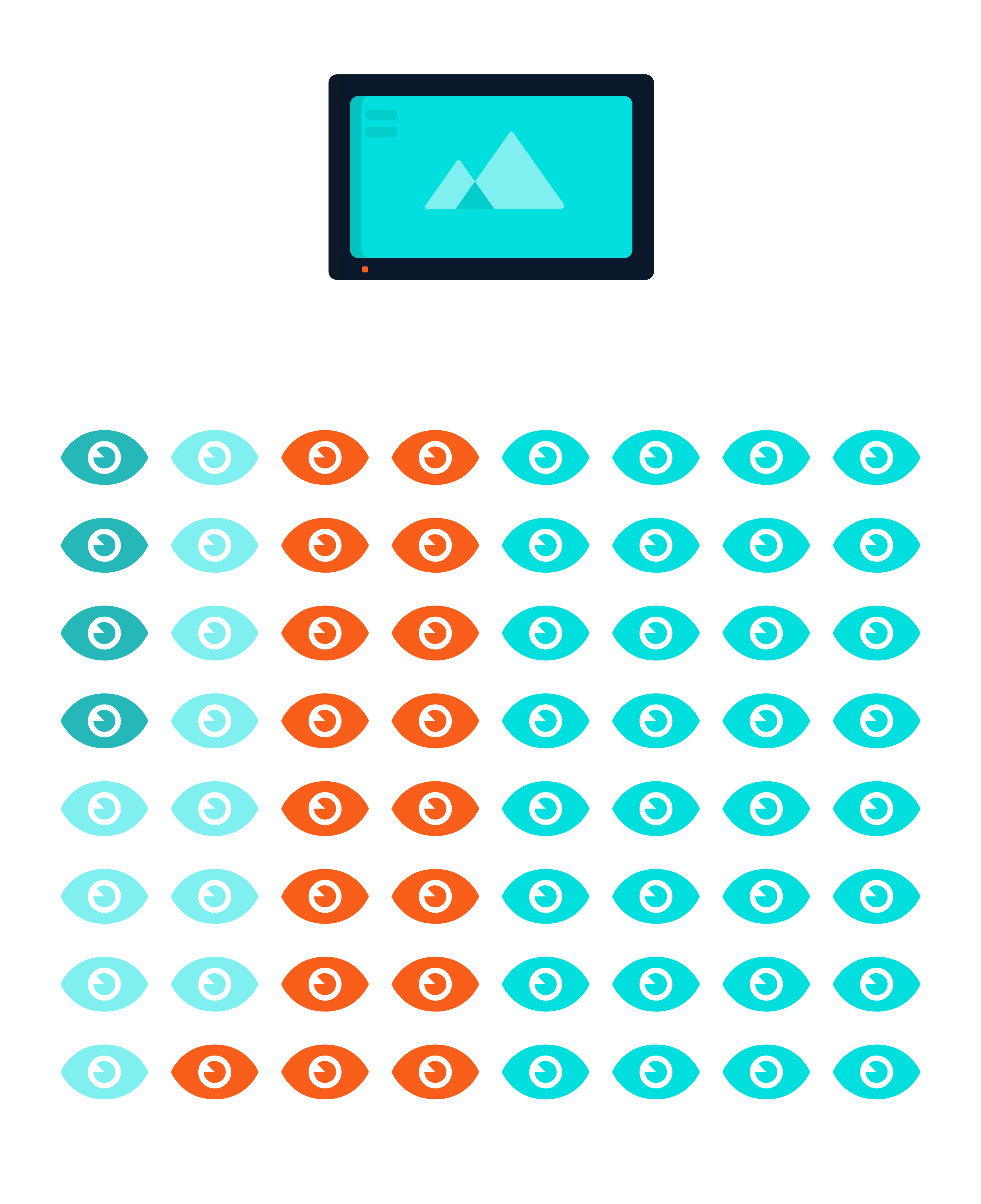
For example, at different times of the day, a campaign may experience different exposure due to foot traffic. Even though an ad may get played 10 times in a peak time, while another gets played the same amount in a slow period, the results may produce the same amount of Share of Time (SOT) but a very different Share of Voice (SOV).
Both metrics are important to analyse to ensure a brands content is getting seen and remembered.
Why measurement matters in in-store media
As retail media continues to grow, brands increasingly expect the same level of accountability and transparency that exists in digital advertising channels.
Reliable measurement allows retailers to demonstrate the value of their media networks, optimize screen placements and provide advertisers with clear performance insights.
For brands, these metrics make it possible to evaluate campaign effectiveness, refine creative strategies and align in-store advertising with broader marketing objectives.
Ultimately, measurement transforms in-store media from a static communication tool into a data-driven marketing channel.
By combining metrics such as impressions, reach, dwell time, opportunities to see, and share of voice, retailers and advertisers can gain a deeper understanding of how audiences interact with media in physical environments, and how to maximize the impact of every screen in the store.

Jorn Olsen
Director of Analytics and Retail Media
Let’s talk
Explore how a connected, outcome-driven Retail Media setup can drive real commercial impact.