
ISE 2026 marked a defining moment for the digital signage industry. The mood across the show floor and within the Digital Signage Summit sessions was noticeably confident.
After a recalibrated 2025, the sector is entering 2026 leaner, more focused and strategically aligned around long-term value creation.
The dominant narrative in Barcelona was not about isolated hardware breakthroughs or experimental concepts. Instead, the conversation centered on scalability, simplification and measurable business impact. What’s clear is that digital signage is now being treated as critical communications infrastructure.
Here are the key digital signage trends we saw emerging from ISE 2026, and why they matter.
Managed signage as central to strategy
One of the clearest shifts at ISE 2026 was the elevation of managed signage from a service add-on to a strategic requirement.
As enterprise networks expand across regions and verticals, complexity has increased. Multiple hardware platforms, operating systems, content workflows and compliance requirements have created operational strain for global brands. In response, organizations are prioritising fully managed digital signage ecosystems that reduce risk, centralize control and extend hardware lifecycles.
Remote device management, preventative maintenance, lifecycle refurbishment models and SLA-driven service frameworks are now fundamental components of digital transformation programmes. The emphasis is on resilience and operational continuity, rather than reactive support.
This shift reflects a broader structural evolution in the market – one that we are actively shaping through our full-solution partner model. Today, enterprise digital signage demands more than strong design and seamless deployment; it requires long-term governance, intelligent service architecture, and continuous optimization. By combining proprietary software, professional operation, hardware and content expertise and strategic consultancy within one unified offering, we are redefining managed service as the backbone of modern digital signage ecosystems.
AI in digital signage enters its production era
Artificial intelligence was widely discussed at previous trade shows. At ISE 2026, however, the conversation shifted decisively from potential to tangible.
AI in digital signage is now being deployed at scale. Generative tools are accelerating content production. Predictive analytics are helping optimize campaign performance. Real-time audience measurement is enabling more precise targeting. Dynamic content scheduling is becoming increasingly autonomous.
What distinguishes 2026 from previous years is integration. More so than previous years, AI is being embedded directly within digital signage software platforms and CMS environments. This integration allows organizations to move beyond manual optimization and towards continuous performance refinement.
For retail media networks, transport operators and enterprise environments, this represents a significant leap forward. Campaigns can now adapt in real time to behavioural patterns, environmental conditions and commercial priorities.
The industry has moved from asking whether AI belongs in digital signage, to determining how quickly it can be operationalized.
Consolidation and scale redefine the competitive landscape
Another defining theme at ISE 2026 was market consolidation. Mergers, acquisitions and strategic partnerships are reshaping the digital signage ecosystem, and scale is increasingly determining competitive advantage.
Enterprise clients are no longer seeking fragmented delivery models. They are favouring partners capable of providing software development, content creation, hardware integration, data analytics and managed services under one cohesive structure. As digital signage networks grow more complex and geographically distributed, consistency becomes critical.
Through our full-solution partner model, we enable global rollouts with consistent governance, innovation and accountability across every market. Our proprietary platform Engage Suite and expertise – spanning strategy, software, deployment and managed services – ensure digital ecosystems are scalable, sustainable and future-ready.
Software defines differentiation in 2026
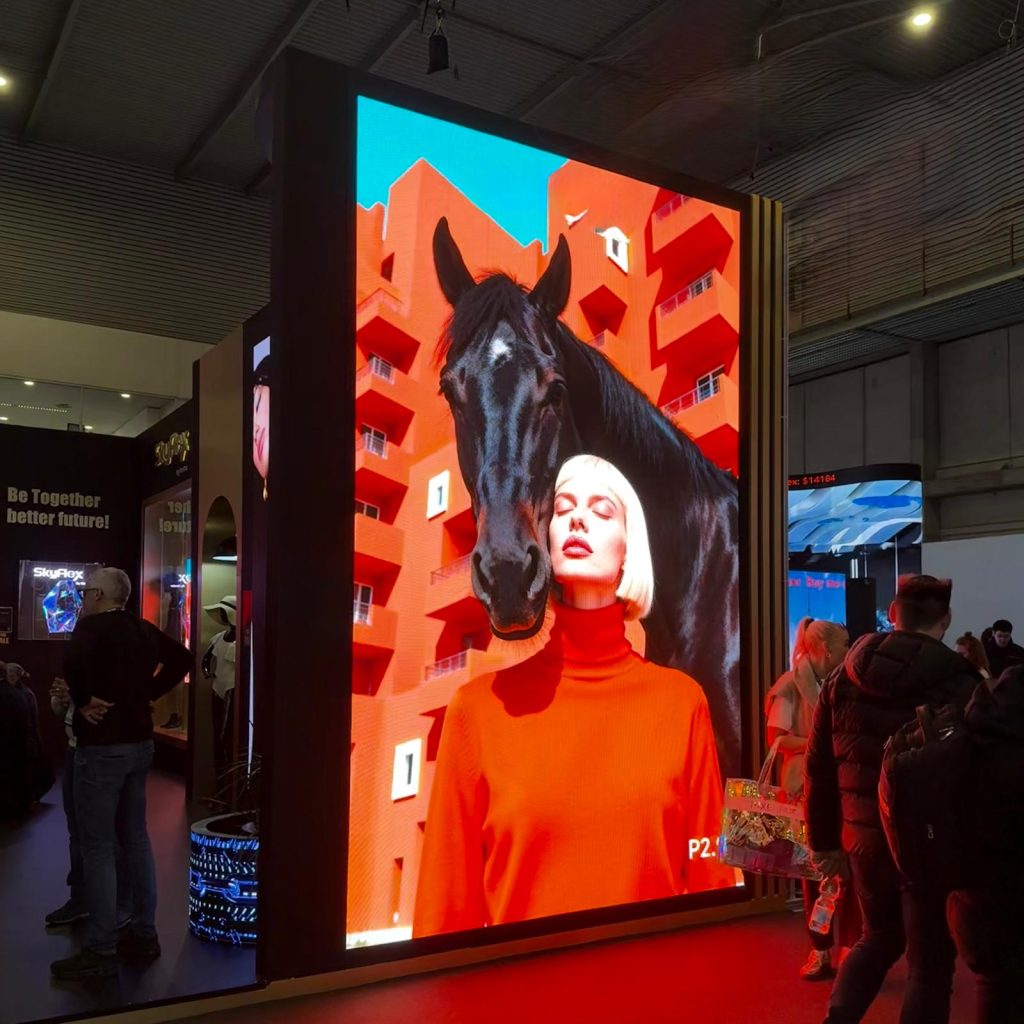
While LED advancements, tighter pixel pitches and new display formats drew attention on the show floor, the real differentiation at ISE 2026 was happening at the software level.
Digital signage software is now the primary driver of long-term value. Remote device services, API integrations, cybersecurity compliance, ERP and CRM connectivity, and programmatic advertising enablement are shaping procurement decisions more than panel specifications.
Major display manufacturers are expanding their platform capabilities, but enterprise strategy increasingly depends on how software ecosystems integrate across business functions. A flexible CMS platform that enables omnichannel alignment, real-time analytics and dynamic content management is now fundamental.
In 2026, digital signage is best understood as a software-led communication platform supported by hardware – not the other way around.
Retail media networks and DOOH convergence accelerate
Retail media was one of the most commercially significant themes at ISE 2026. The integration of digital signage networks into broader advertising ecosystems is creating powerful monetization opportunities.
Retailers are leveraging in-store digital screens as media assets, integrating programmatic DOOH, audience measurement and data-driven attribution models. This convergence of adtech and physical environments is redefining the role of digital signage within retail strategy.
However, monetization demands robust infrastructure. Accurate audience analytics, real-time campaign reporting and secure integration with SSP platforms are essential for credibility and scalability.
Digital signage is no longer simply influencing purchasing behaviour at the point of sale; it is becoming a measurable media channel in its own right.
Sustainability becomes embedded, not advertised
Although sustainability was not always front-and-center in keynote messaging, it was consistently embedded within system design conversations.
Energy-efficient LED, remote diagnostics that reduce service travel, brightness optimization technologies and refurbishment frameworks are increasingly built into managed signage models. Sustainability is no longer positioned as a marketing initiative; it is becoming operationally and commercially necessary.
For enterprise brands facing ESG scrutiny, digital signage networks must now align with broader environmental governance goals.
The strategic outlook for digital signage in 2026
ISE 2026 demonstrated that the digital signage industry has matured. The emphasis has shifted from visual spectacle to strategic infrastructure.
The defining characteristics of 2026 are simplification, service integration, software-led ecosystems and measurable impact. Enterprise brands are seeking resilient digital platforms that integrate seamlessly with their wider technology stacks and deliver consistent global performance.
For integrators and solution providers, success will depend on the ability to reduce operational complexity while increasing technical capability. Those who can combine proprietary software development, managed services and strategic consultancy will shape the next phase of market growth.
Digital signage is no longer a peripheral AV investment, but a core component of digital transformation across retail, transport, workplace and public environments. The signals coming out of Barcelona suggest that 2026 may well be remembered as the year digital signage fully stepped into that role.