
Smarter Store and Connected Experiences
EuroShop has long been recognised as one of the most important global meeting points for the retail industry, and the 2026 edition in Düsseldorf once again brought together innovators, technology providers and retailers from around the world. The scale and international character of the event created a valuable opportunity to observe how the sector is evolving and where investment priorities are currently focused. Across the exhibition halls, the discussions and demonstrations reflected an industry that continues to invest in technology with the intention of strengthening operational efficiency while also enhancing the customer journey.
ZetaDisplay Team at Euroshop 2026

Zuzana Yalcin-Reiter
Business Development Manager
ZetaDisplay Austria

Frank Hagemann
Country Director
ZetaDisplay Germany
Walking the show floor and speaking with partners and technology specialists revealed several themes that appeared repeatedly across the event. These trends illustrate how the modern store environment is gradually becoming more connected, more intelligent and increasingly integrated with digital marketing ecosystems.
The store environment is evolving through digital culture
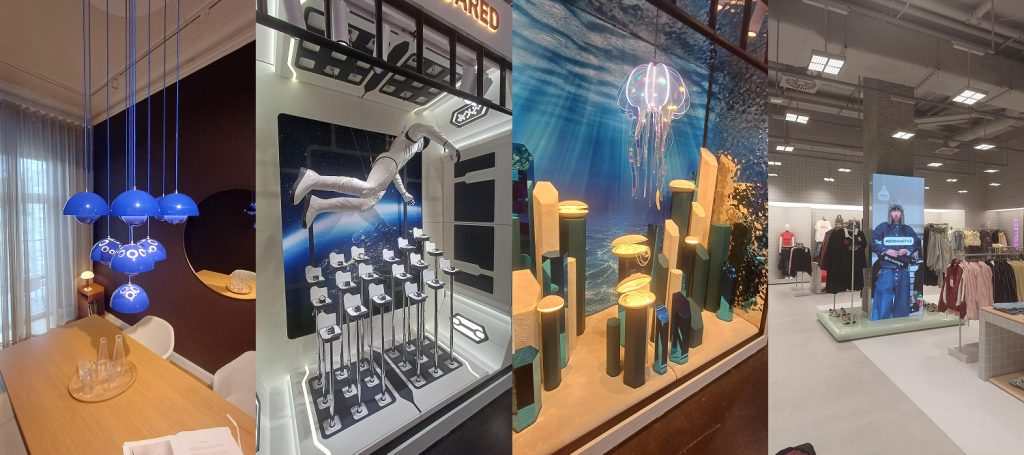
Another clear direction emerging from EuroShop 2026 was how digital culture is influencing the design and purpose of physical retail environments. Retail spaces are increasingly shaped by the expectations created through e-commerce and social media, which affect how stores are designed, experienced and navigated by customers.
This influence can already be seen in areas such as lighting design, where retailers are experimenting with brighter, camera-friendly environments that translate well into photos and videos shared on social platforms. The store environment is increasingly conceived as a visually appealing setting that encourages interaction and social sharing. As lighting intensity increases across many retail concepts, display technology must also evolve to ensure content remains clearly visible and engaging within these brighter environments.
Sound design has also become a more deliberate part of store planning. Retailers are investing in bespoke audio concepts and more advanced sound systems that guide customers through the store in subtle ways. Algorithmically curated in-store radio and dynamic audio environments allow retailers to shape the atmosphere of different areas while influencing how visitors move through the space. These developments reflect a growing recognition that sound contributes to the overall experience of the store and can support both brand identity and customer engagement.
Retailers are also experimenting with visual formats inspired by the way content is consumed on digital platforms. Portrait-oriented displays appeared frequently across the exhibition halls, reflecting the visual language of mobile devices and social media feeds. Displays were integrated into shelving units, furniture elements and decorative installations across many stands, demonstrating how digital communication can become part of the spatial design of the store.
This design approach combines digital signage, sound and lighting as part of a unified experience that draws attention naturally as customers move through the environment. As retailers explore these integrated store concepts, the visibility and value of digital displays within the retail environment is also increasing, creating new opportunities for communication and commercialisation within the store.
Sensors and RFID technologies are shaping the intelligent store
Technologies that connect the physical store with data insights also received significant attention across the exhibition. Sensor technologies, RFID solutions and other connected systems are becoming increasingly embedded in modern retail environments.
These technologies allow retailers to better understand how customers move through stores, how they interact with products and how different areas of the retail environment perform. This behavioural insight allows communication strategies within the store to become more contextual and responsive.
As stores become more connected, retailers can also gain a clearer picture of the types of audiences present in different areas of the store at a given moment. Understanding whether a particular store zone is attracting families, individual shoppers or other customer groups allows content and messaging to be adapted accordingly.
The ability to collect and interpret this type of in-store data is an important step toward creating environments where communication, merchandising and marketing activity can respond more closely to the real conditions within the store.
Retail media is expanding across the store landscape
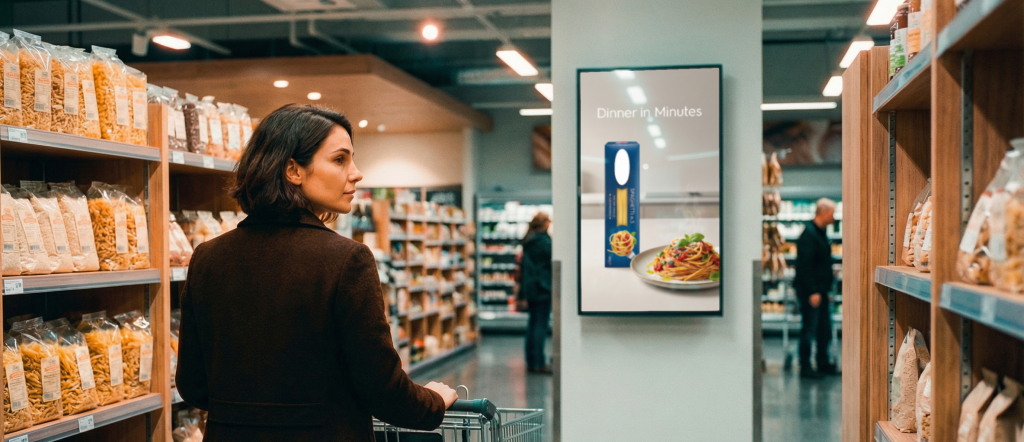
If one topic appeared repeatedly throughout EuroShop and across many of the conference discussions, it was retail media. Retailers are increasingly recognising the value of their physical environments as communication platforms that can support both brand messaging and advertising opportunities.
Digital screens within stores are becoming part of broader retail media networks that allow brands to reach customers close to the point of purchase. These networks provide opportunities for targeted campaigns while also creating additional revenue streams for retailers.
At the same time, many industry discussions emphasised that the shopper experience must remain the primary concern when developing retail media networks. If advertising and monetisation strategies overwhelm the store environment or disrupt the customer journey, the long-term value of the network can quickly diminish.
Several panel discussions highlighted examples where retailers entered into revenue-sharing agreements with vendors based on ambitious monetisation forecasts, only to discover that the resulting commercial pressure led to compromises in hardware quality, content balance or overall store experience. These situations created tensions between brand communication and advertising objectives and ultimately reduced the effectiveness of the retail environment.
For this reason, many retailers are increasingly emphasising the importance of working with trusted full-service partners who can ensure that both the technology infrastructure and the monetisation strategy support the overall brand experience. When implemented thoughtfully, retail media networks can enhance the store environment by presenting relevant, well-integrated content that feels informative and engaging rather than intrusive.

Jorn Olsen
Director of Analytics and Retail Media
Where Retail Media
is heading
Our Director of Analytics and Retail Media shares his perspective.
Data and analytics are moving to the centre of innovation
While content management platforms and display technologies have reached a relatively mature stage of development, the emphasis across many presentations and discussions focused on how data generated within retail environments can be processed and interpreted.
Data and analytics were clearly front and centre at this year’s EuroShop. Linking in-store transactions and behavioural data with the retailer’s wider digital ecosystem holds significant potential that many retailers are only beginning to explore.
For shoppers, this trend opens the possibility of more personalised and convenient in-store experiences inspired by the tailored interactions that have become common in e-commerce. By combining in-store data with information from loyalty programmes, online channels and mobile applications, retailers can create a more coherent and customer-centred experience across all touchpoints.
At the same time, industry discussions frequently emphasised the importance of handling in-store data responsibly. Retailers remain highly conscious of the need for transparent, respectful and GDPR-compliant approaches to data collection and usage.
When implemented correctly, these technologies allow much of the operational complexity of modern retail to operate quietly in the background. Technology performs the heavy lifting while remaining integrated into the customer journey in an organic and useful way. The result is a retail environment in which digital systems connect the retailer’s various channels into a single, coherent experience centred around the needs of the customer.
Back to basics: Retail Media Glossary
We recently published an article about the technology we use to turn in-store screens into measurable media channels
A connected future for retail environments
EuroShop 2026 demonstrated the continued commitment of the retail sector to investing in technologies that strengthen both operational efficiency and the overall customer experience. The store environment is gradually evolving into a connected ecosystem where digital displays, sensor technologies, audio environments and data platforms operate together within a unified infrastructure.
This evolution is shaping the future of retail spaces in which communication, analytics and customer engagement become increasingly integrated. The innovations presented in Düsseldorf illustrate how retailers are building environments that are responsive, data-informed and capable of adapting to the rapidly changing expectations of modern consumers.